

Is Your Telemetry System Putting Your Program at Risk?
Cardiopulmonary rehab programs depend on telemetry systems every day to deliver safe, effective patient care. However, many of these systems were implemented before cybersecurity became a formal expectation tied to HIPAA compliance, hospital IT standards, and accreditation readiness.
As a result, outdated operating systems, unpatched workstations, or unsecured network connections can introduce hidden risk to patient data and program operations—often without programs realizing it.
In 2025, healthcare cyberattacks surged 55%, and nearly 50 new breaches were reported every month heading into 2026. As hospital IT standards and regulatory expectations continue to evolve, cardiopulmonary rehab programs are increasingly expected to demonstrate that clinical systems meet modern cybersecurity requirements.
The Question Every Rehab Manager Should Be Able to Answer

“If our telemetry system were audited tomorrow, could we prove it meets today’s cybersecurity standards?”
For many programs, the honest answer is: I’m not sure.
And that uncertainty is exactly where risk lives.
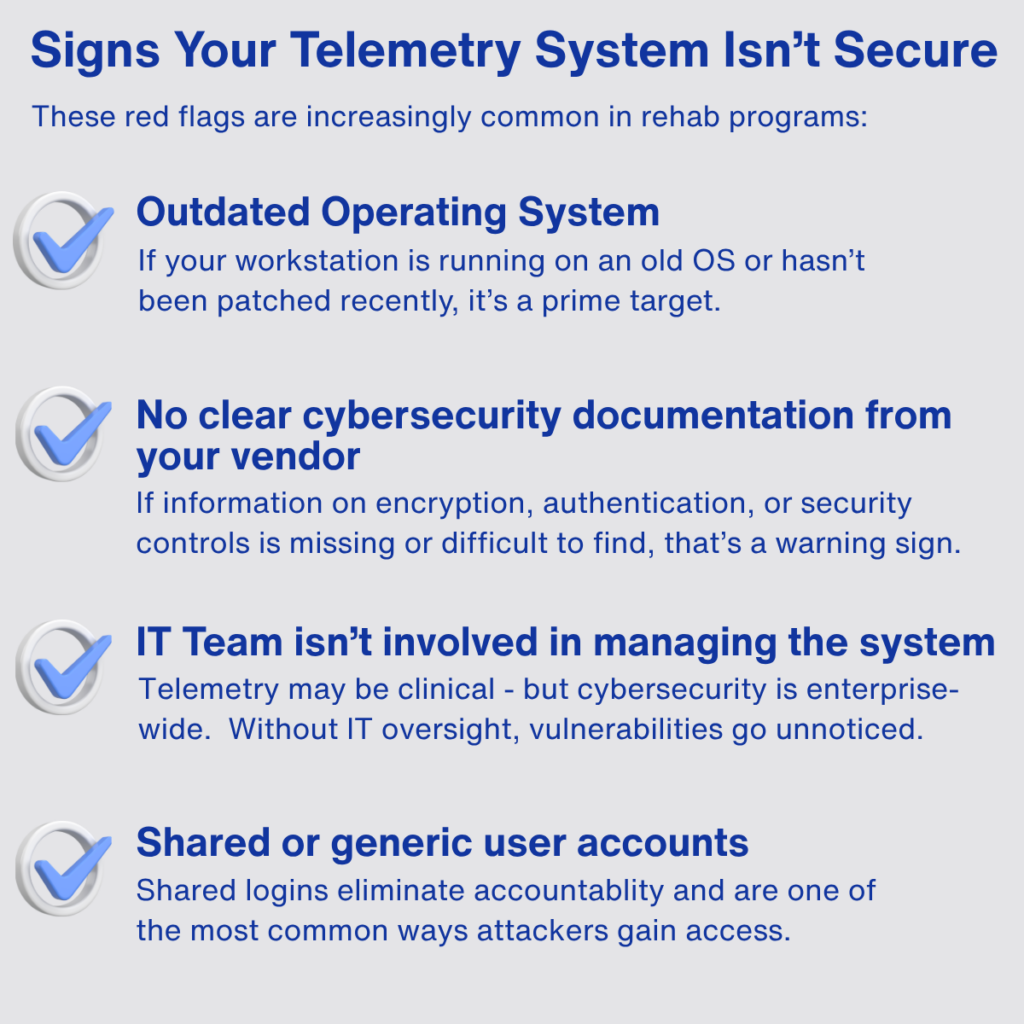
Why Those Warning Signs Exist
If the warning signs sound familiar, there’s a common reason: many telemetry systems in use today were designed for clinical reliability—not modern cybersecurity requirements.
As a result, legacy telemetry platforms often struggle to meet expectations that are now standard in healthcare. Safeguards around patient data, access control, and system oversight were not core considerations when these systems were introduced.
In today’s environment, security needs to be integral to how telemetry systems function, not something added later. Most platforms were never designed with that expectation in mind.
Aermos was designed to address that gap.

Aermos — Built for Today’s Cybersecurity Standards
Aermos, ScottCare’s new cardiopulmonary rehab management system, was purpose-built in close alignment with healthcare IT and cybersecurity best practices to address the specific cybersecurity challenges cardiopulmonary rehab programs face today.
Aermos is FDA‑cleared and was designed to meet the FDA cybersecurity guidance, setting a new standard for protecting patient data in rehab environments.
Aermos delivers:
- End‑to‑end encryption for data in transit and at rest
- A secure private network designed specifically for Aermos
- Modern user access controls with full accountability
- Regular security updates to maintain compliance
- Architecture that isolates clinical systems from broader hospital network risk
The result: reduced cybersecurity exposure, fewer disruptions, and a system designed to keep your program operating safely, reliably, and in alignment with hospital IT expectations.
Ready to Strengthen Your Security?
If there’s any uncertainty about how your telemetry system would fare in a cybersecurity review, it’s worth taking a closer look.
Your ScottCare Account Manager can walk through your current setup, highlight potential gaps, and discuss how a more secure approach can support your program moving forward.